The Art of Pixels: How Far Digital Creativity Has Come
From early pixel-based experiments to intricate digital landscapes, the evolution of digital art reflects decades of artistic exploration and technological prog
Digital art has travelled an extraordinary distance from its earliest experiments with computer-generated imagery. What began with limited colors, basic geometric forms, and relatively simple rendering techniques has evolved into an expansive creative discipline capable of producing remarkable visual complexity. Over the decades, improvements in computing power, display technology, graphics software, and digital drawing tools have continuously expanded what artists can achieve. The transition from pixel-based graphics to sophisticated vector illustrations, digital paintings, procedural environments, and photorealistic three-dimensional compositions represents more than technological advancement. It reflects the gradual development of an artistic medium with its own techniques, traditions, and visual identities. Today, artists can recreate the intricate architecture of historic cities, construct entirely imaginary environments, or reduce complex landscapes into carefully balanced geometric compositions. What once demanded considerable technical resources can now be explored on devices accessible to millions of creators, making digital expression more versatile and widespread than at any previous point in its history.
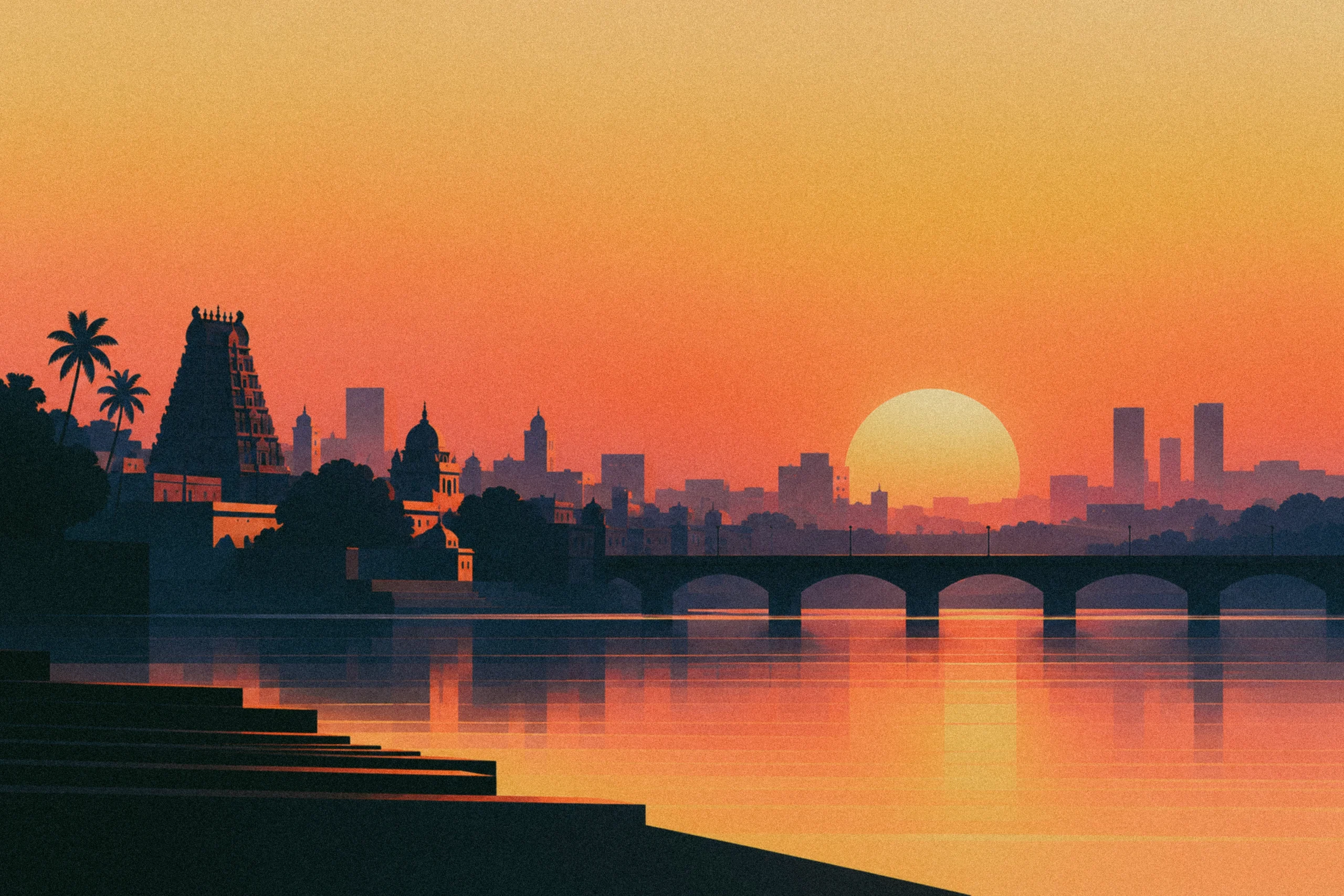
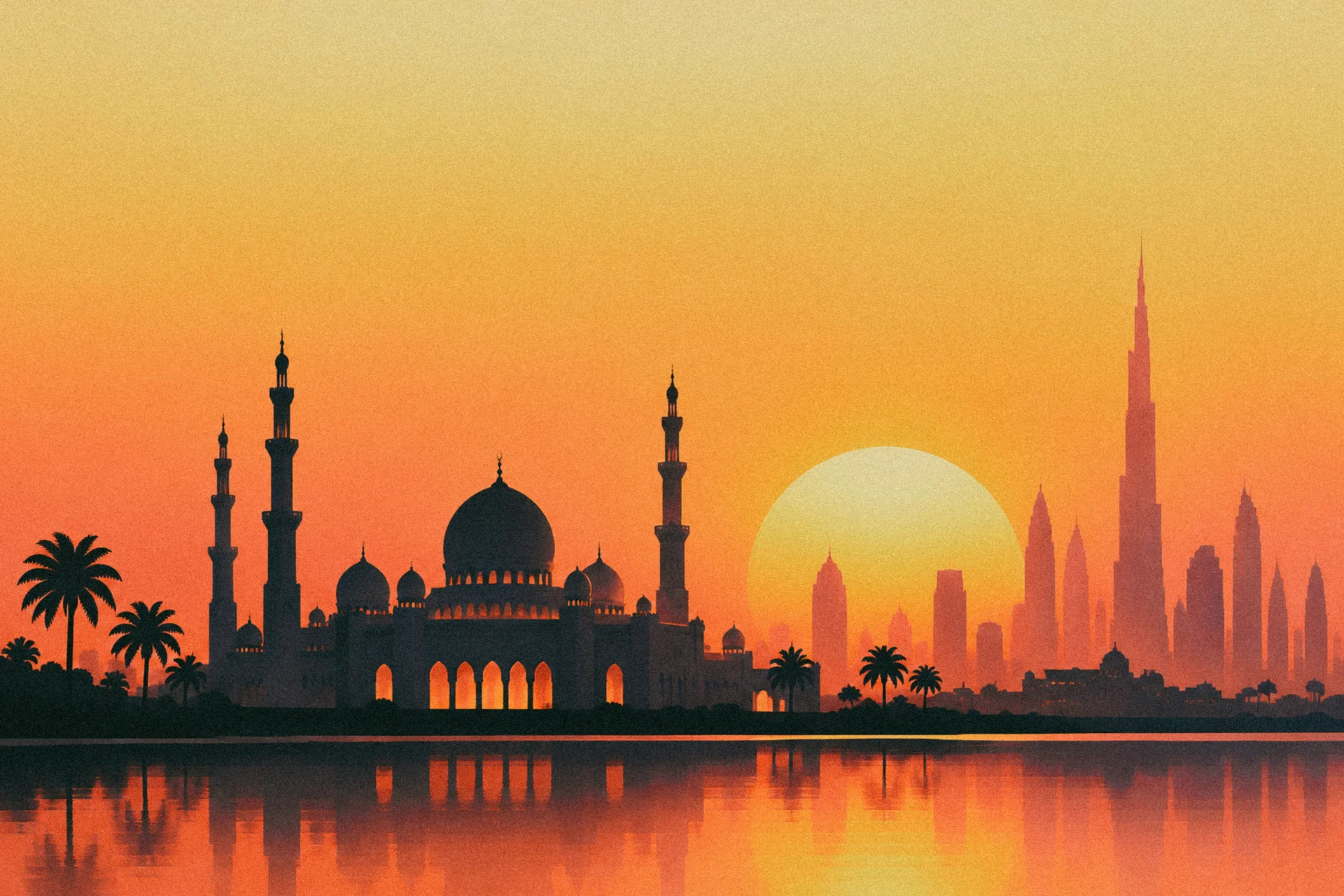
One of the most fascinating aspects of this evolution is how digital artists have learned to balance complexity with simplicity. Greater technical capabilities have not necessarily resulted in increasingly elaborate artwork. Instead, many contemporary visual styles embrace restraint, using simplified geometry, carefully selected color palettes, and deliberate composition to communicate atmosphere and identity. A city skyline, for instance, can be represented through a series of architectural silhouettes, while subtle gradients and contrasting shades establish the impression of depth, distance, and natural lighting. Modern vector-inspired landscapes demonstrate how effectively familiar environments can be reinterpreted without attempting to reproduce every physical detail. Color has become particularly important in this process. The relationship between warm sunset tones, muted pastels, and deep contrasting shadows can transform an ordinary urban scene into an expressive visual composition. These techniques reveal an important characteristic of artistic progress: sophistication is not always measured by the quantity of detail, but by how thoughtfully visual elements are arranged to communicate an idea.
The development of digital creative tools has also fundamentally changed the artistic workflow. Early computer graphics demanded considerable patience and technical understanding, with artists frequently working around restrictive hardware, limited memory, and basic software capabilities. Contemporary workflows offer extraordinary flexibility through advanced illustration applications, pressure-sensitive drawing devices, scalable vector graphics, sophisticated rendering engines, and increasingly capable generative systems. Artists can experiment with lighting, perspective, texture, and composition while maintaining precise control over individual elements. Three-dimensional environments can be constructed and illuminated with physically based rendering techniques, while procedural systems can generate complex patterns and structures from mathematical rules. More recently, artificial intelligence has introduced additional methods for exploring visual concepts, generating imagery, and assisting creative processes, alongside important questions about authorship, consent, and attribution. These developments are part of a much longer progression in which technology continually changes how visual ideas are produced. Yet despite the sophistication of modern tools, the principles of composition, contrast, visual hierarchy, and artistic intention remain as relevant as ever.
Perhaps the most meaningful achievement of digital art is the remarkable diversity of expression it now supports. The same medium can accommodate highly realistic architectural visualizations, experimental abstract compositions, intricate illustrations, animated environments, and minimalist interpretations of recognizable places. Artists can explore cultural landmarks, urban landscapes, natural environments, and imagined worlds through visual approaches that would have been difficult or impractical only a few decades ago. Digital platforms have further expanded this creative landscape by allowing artwork to circulate across geographical boundaries, connecting independent creators with audiences who might otherwise never encounter their work. As technologies continue to develop, the distinction between traditional artistic disciplines and digital methods will likely become increasingly fluid, with creators combining techniques rather than remaining confined to individual categories. Looking at the journey from early computer graphics to the extraordinary range of work produced today, the significance of digital art lies not simply in improved resolution, processing power, or technical realism, but in the creative freedom those advances have made possible. The tools will continue to evolve, and so will the ways artists use them to interpret the world. What remains constant is the human desire to transform an idea into something worth seeing.